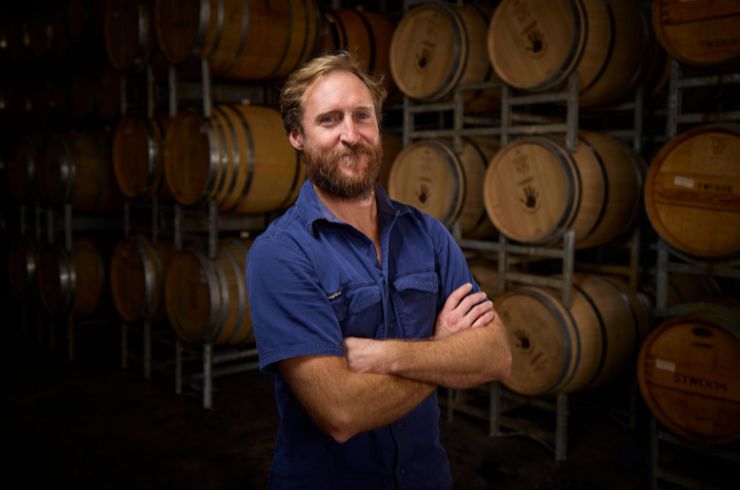
“I was always fascinated by the wine industry,” says Dan Piwko-Graham. “All the big tanks and big pumps and the buzz around harvest time… it drives the imagination of a young boy.”
A second-generation winemaker who grew up in Yenda, near Griffith, in New South Wales’ predominantly bulk winegrowing Riverina region, Dan was always going to follow his father into the trade. It was less expected that he would end up making small-batch, lo-fi wines from sustainably farmed vineyards under his own label, Sigurd.
“It was definitely going against the grain of what I had grown up and trained into,” he says.
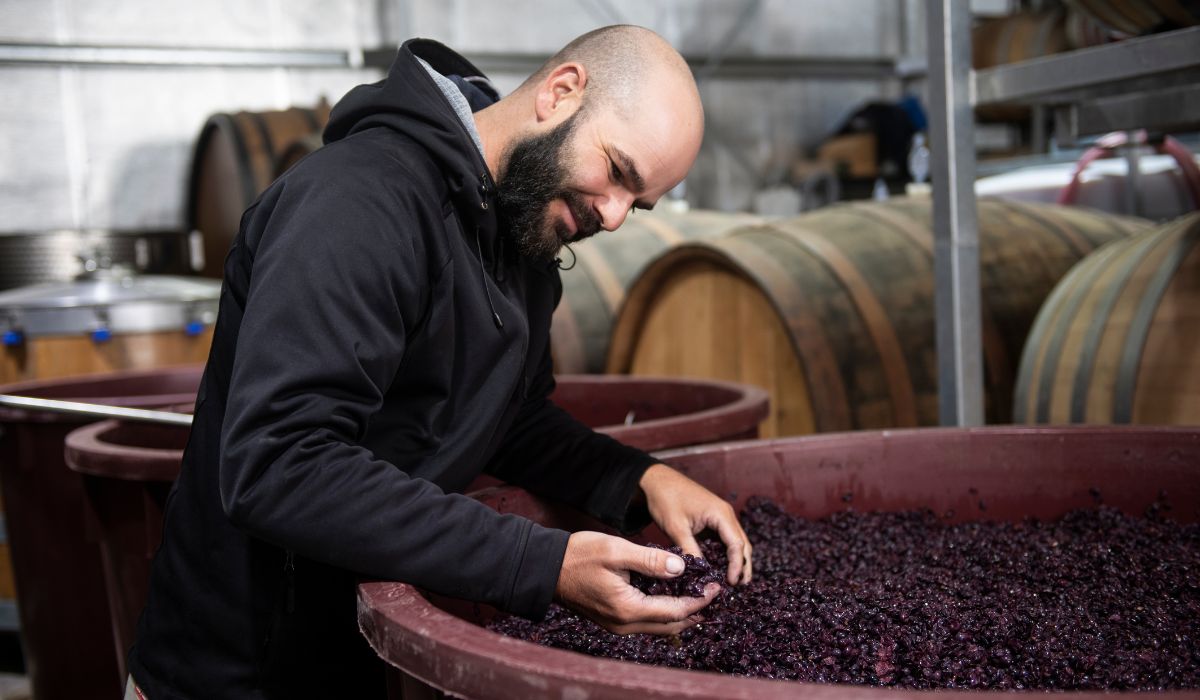
Almost all Dan’s early winemaking experience was gained in large-scale, commercial wineries, from his first vintage at Casella, to the Charles Sturt Winery in Wagga Wagga, where he worked while completing a double degree in oenology and viticulture.
After graduation, Dan went to Canada to snowboard for three months, which turned into a year and a harvest in the Okanagan Valley. Back-to-back vintages in the Hunter, Central Otago and Portugal followed in 2010. In 2011, he moved to the Barossa to work for Jacob’s Creek, where he stayed, around vintages in Barolo and Hermitage, until joining RedHeads in 2014.
His big turning point was a bottle of Radikon Ribolla he drank among the "lovely old Barolos" in La Morra. “I was looking at this 10-year-old skin-contact white thinking, oh my God, this is unreal. How fresh is this? How good are these phenolics? How structured and long living can this wine be?

“It really changed my perception of what wine could be,” Dan adds. “Until then, I’d only ever been told, ‘No, you can't do that. We don't do it like that'. This wine made me realise I could do whatever the hell I wanted.”
When he launched Sigurd (which is both Dan’s middle name and the name of his great-grandfather, who emigrated from Norway to the Riverland after WWI) in 2012, its ethos, while familiar today, was rather revolutionary. Stylistically, too: “Everything in the Australian market was pretty linear, pretty laser-focused in style,” Dan says. “I wanted to bring back some flesh, similar to what I’d been drinking in Europe.”
Excluding the never-released McLaren Vale grenache he made in that first year, Sigurd’s early wines were largely blends – a red and a white, made with the best available fruit – with a rosé added in 2015. In 2016, he began to add varietal wines, starting with a chenin blanc sourced from Richard Hughes (father of Rieslingfreak’s John Hughes) in the Clare Valley.
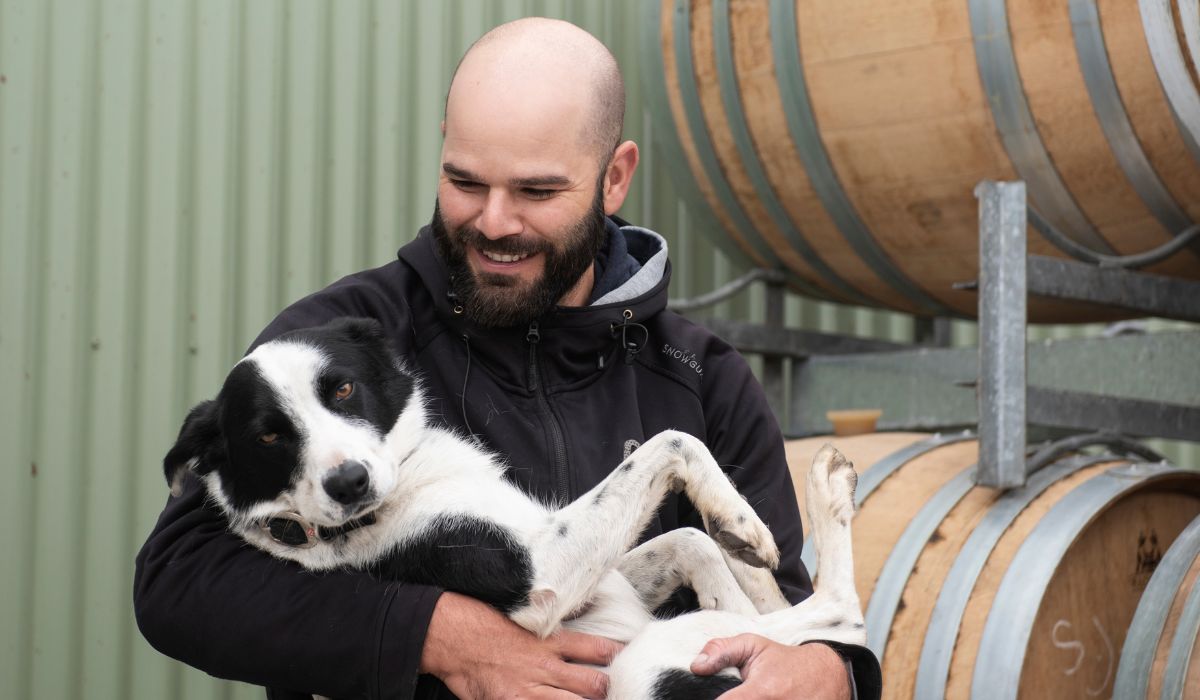
Today, the Sigurd range also includes varietal syrah, semillon and grenache, and fruit mostly comes from either the Hoffmann-Dallwitz vineyard (“Although we don’t get any of the fancy Fraser McKinley shiraz,” he jokes) in Ebenezer, or a plot in Vine Vale.
"I've continued to experiment with what works best and what regions within the Barossa work well together," Dan says. "There's a lovely richness and depth to Ebenezer fruit that, when combined with the lovely linearity and acid drive of Vine Vale, helps to make lovely, refined wines with depth and power."
See how Marcus Ellis scored the current release below, and head to the Sigurd website to learn more.
Sign up to view these tasting notes and ratings
By becoming a member of Wine Companion, you'll have access to the largest database of wines in Australia.
Expand your knowledge with Halliday Wine Academy
Halliday Wine Academy offers an in-depth view of both Australian and international wine landscapes. Select Introduction to Wine to learn about Australian wine and regions or choose from one of our Wines of the World courses to get to know international wines.
Wines of the World: Europe explores the iconic wines, regions and laws of France, Spain, Portugal, Hungary, Germany and Austria, while Wines of the World: Europe and Beyond delves deeper into Italy, Greece, the Americas, South Africa and New Zealand.
Latest Articles
-
![Default article tile image]()
Wine Lists
reds-under-40-dollars-pt2
21 May 2026 -
Wine Lists
Eight wines to try from the Adelaide Hills
21 May 2026 -
Wine Lists
Great wines for great value: 10 shiraz and blends for $40 or under
21 May 2026 -
Win
Win over $400 worth of prizes including James Halliday's 50 Years of Great Wine Dinners
20 May 2026